Co-Chair of the Program joined session on gender equity in science
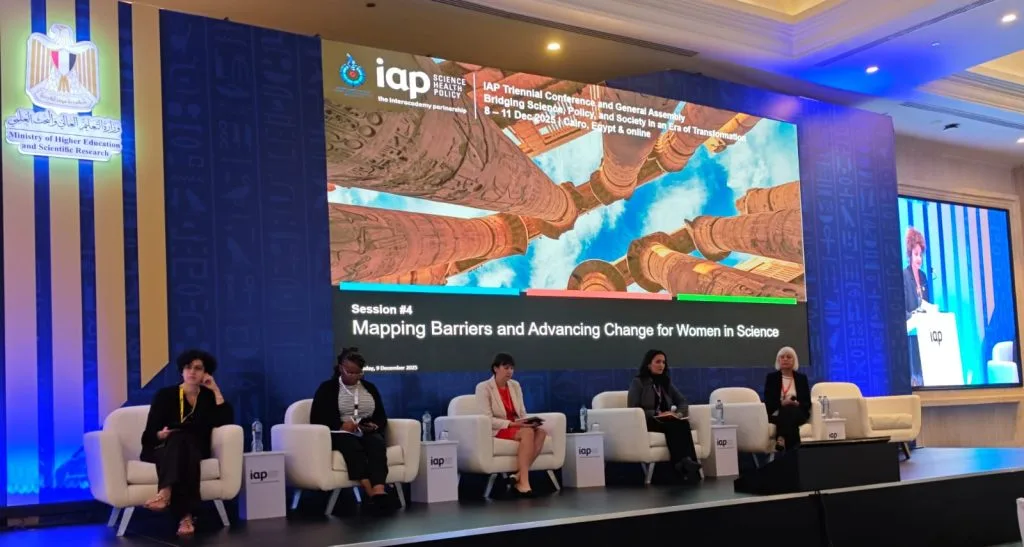
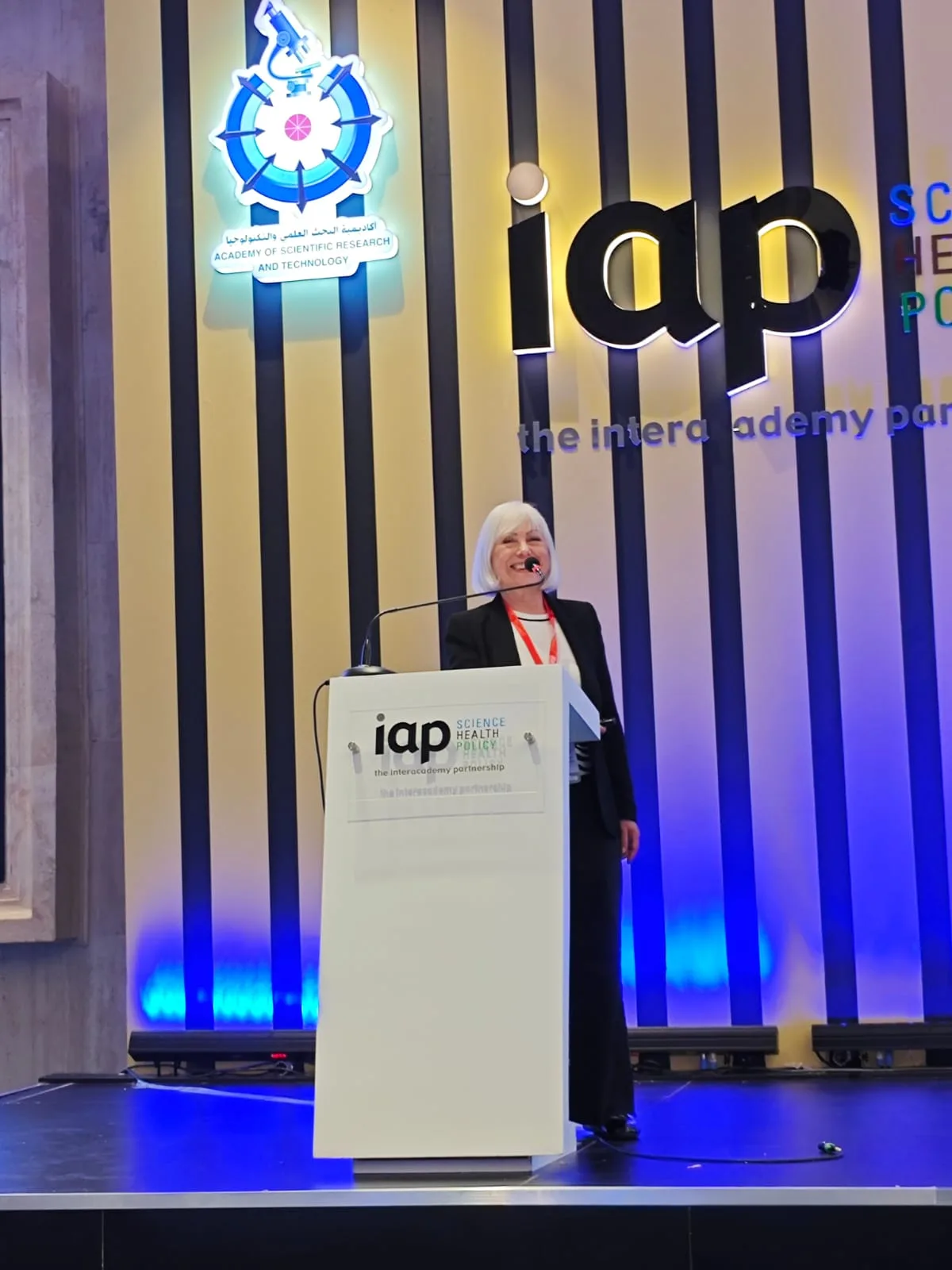
During the 2025 IAP Triennial Conference and General Assembly, held in Cairo, Egypt, from December 8 to 11, Gloria Dubner, Co-Chair of the IANAS Women for Science Program, participated in the session “Mapping Barriers and Advancing Changes for Women in Science”.
The panel was held on December 9 and, in addition to Gloria Dubner (astrophysicist and researcher at the National Scientific and Technical Research Council, Argentina), featured distinguished speakers: Léa Nacache (International Science Council), Palesa Sekhejane (Walter Sisulu University, South Africa), Gina El-Feky (Academy of Scientific Research and Technology, Egypt), and Ashley Bear (U.S. National Academies of Sciences, Engineering, and Medicine). Together, they explored strategies to overcome systemic barriers and advance gender equity in science globally.
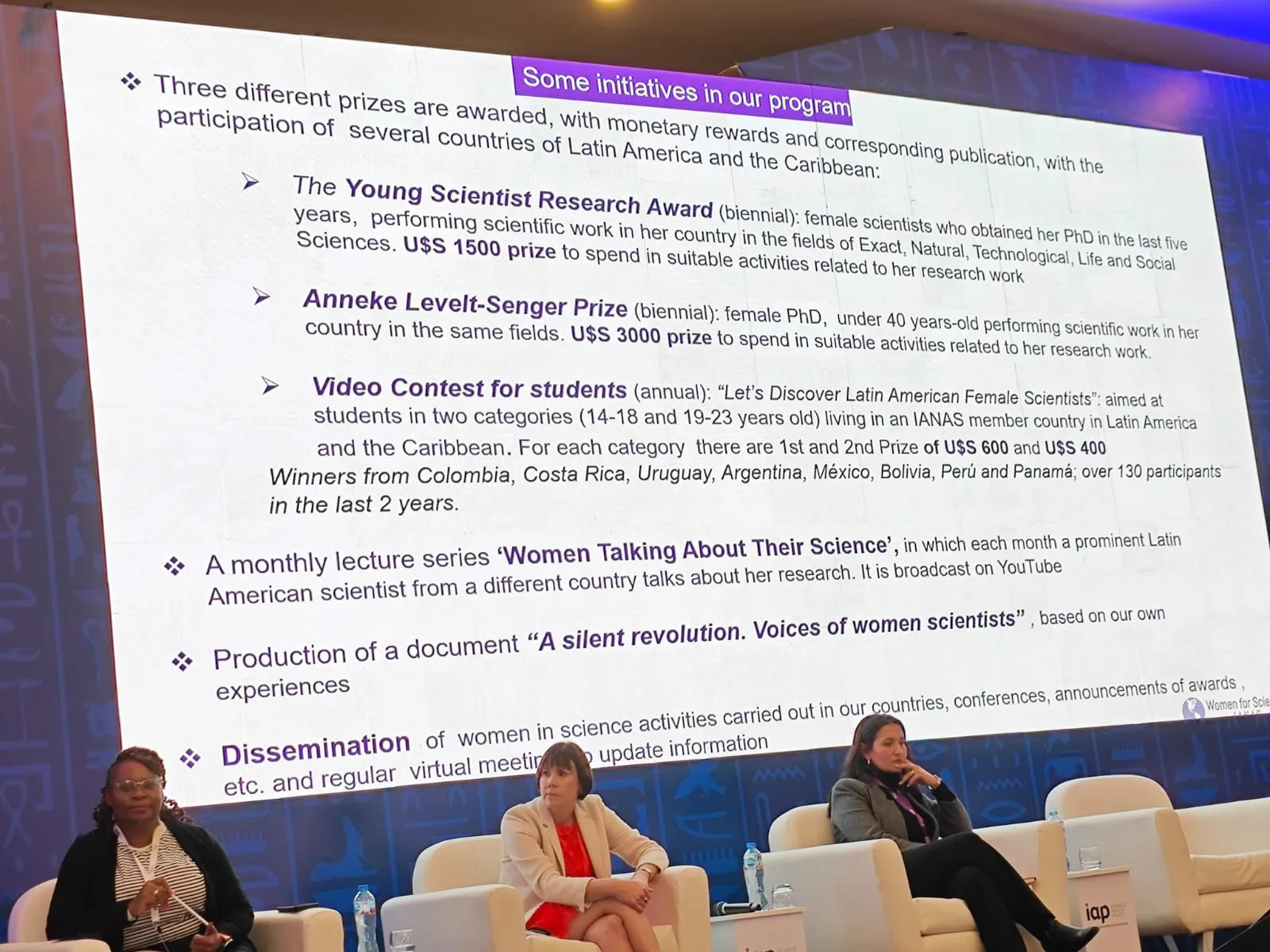
Dubner shared a comprehensive report on the group’s activities and achievements, underscoring the commitment of IANAS to promoting gender equity in science across the Americas. Established in 2010 under the auspices of IAP, the IANAS Women for Science Program brings together Focal Points from 18 national Academies in the region and its initiatives address critical challenges such as:
- Encouraging girls and high school students to pursue scientific careers
- Retaining promising women scientists, particularly those facing economic or family-related obstacles
- Enhancing visibility and recognition of women scientists and their contributions to society
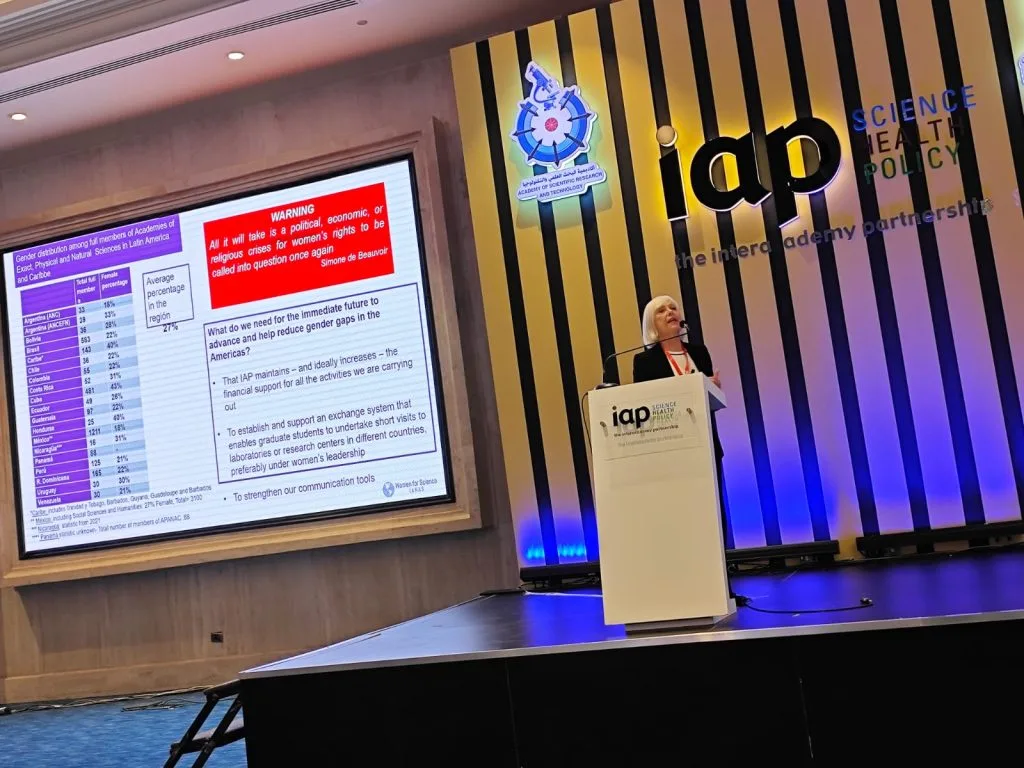
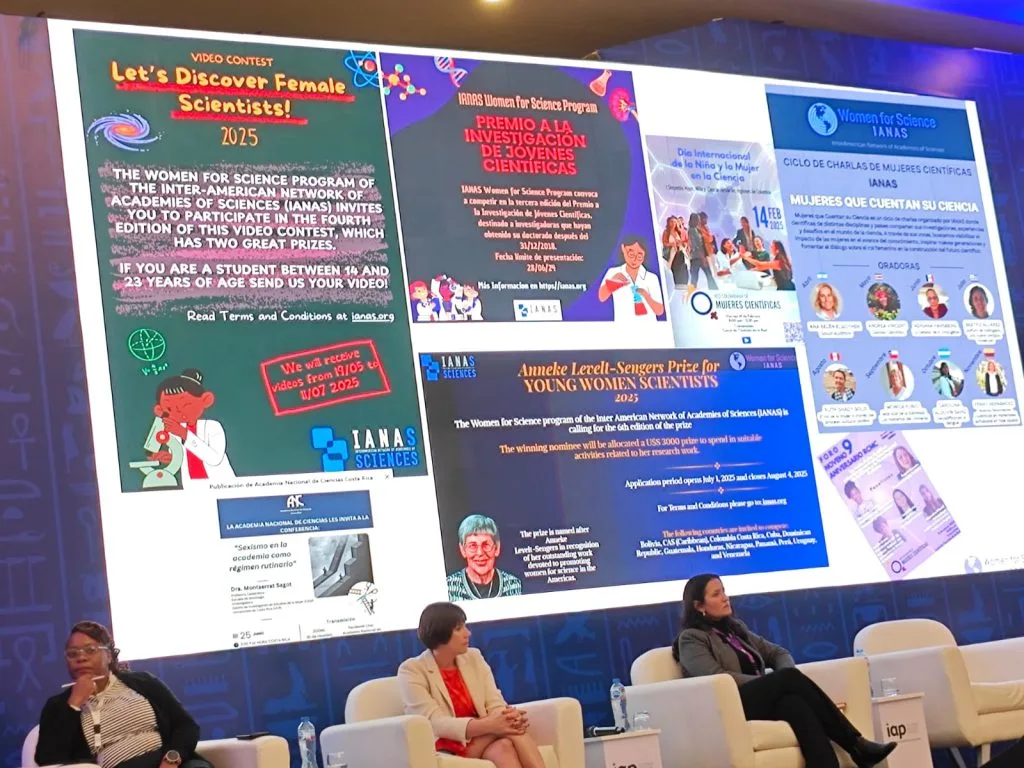
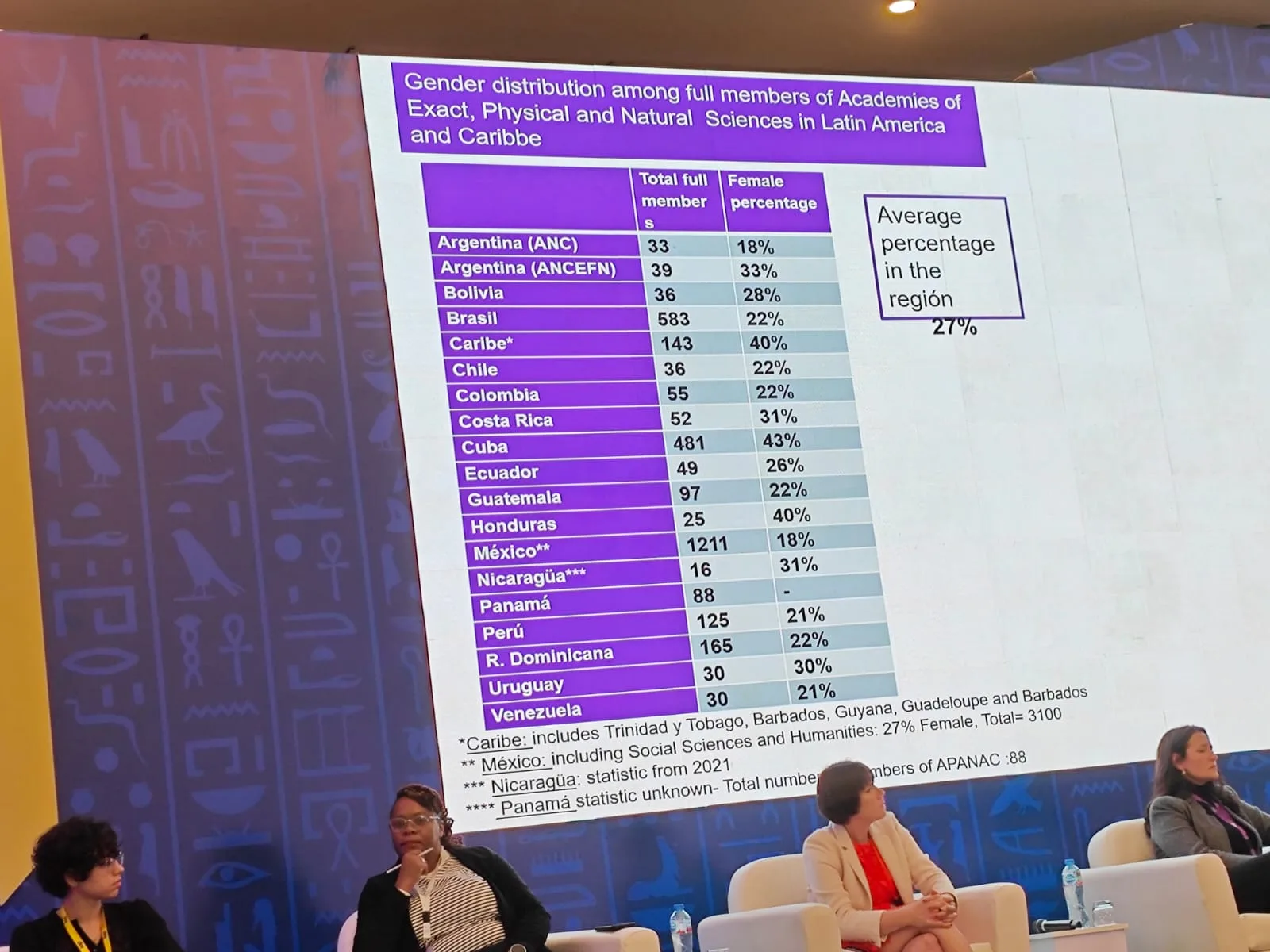
Dubner addressed activities of the WfS Program and women representation in the Academies
Key initiatives include biennial awards for young female scientists, an annual video contest promoting Latin American women in science, and a monthly lecture series titled “Women Talking About Their Science”, available on YouTube. The group also produced the document “A Silent Revolution: Voices of Women Scientists”, amplifying the experiences of women in STEM.
Finally, Gloria Dubner emphasized the need for continued financial support, stronger exchange systems for graduate students, and improved communication tools to reduce gender gaps. Current data reveal that women represent an average of 27% of full members in Science Academies across the region, with significant variation among countries.
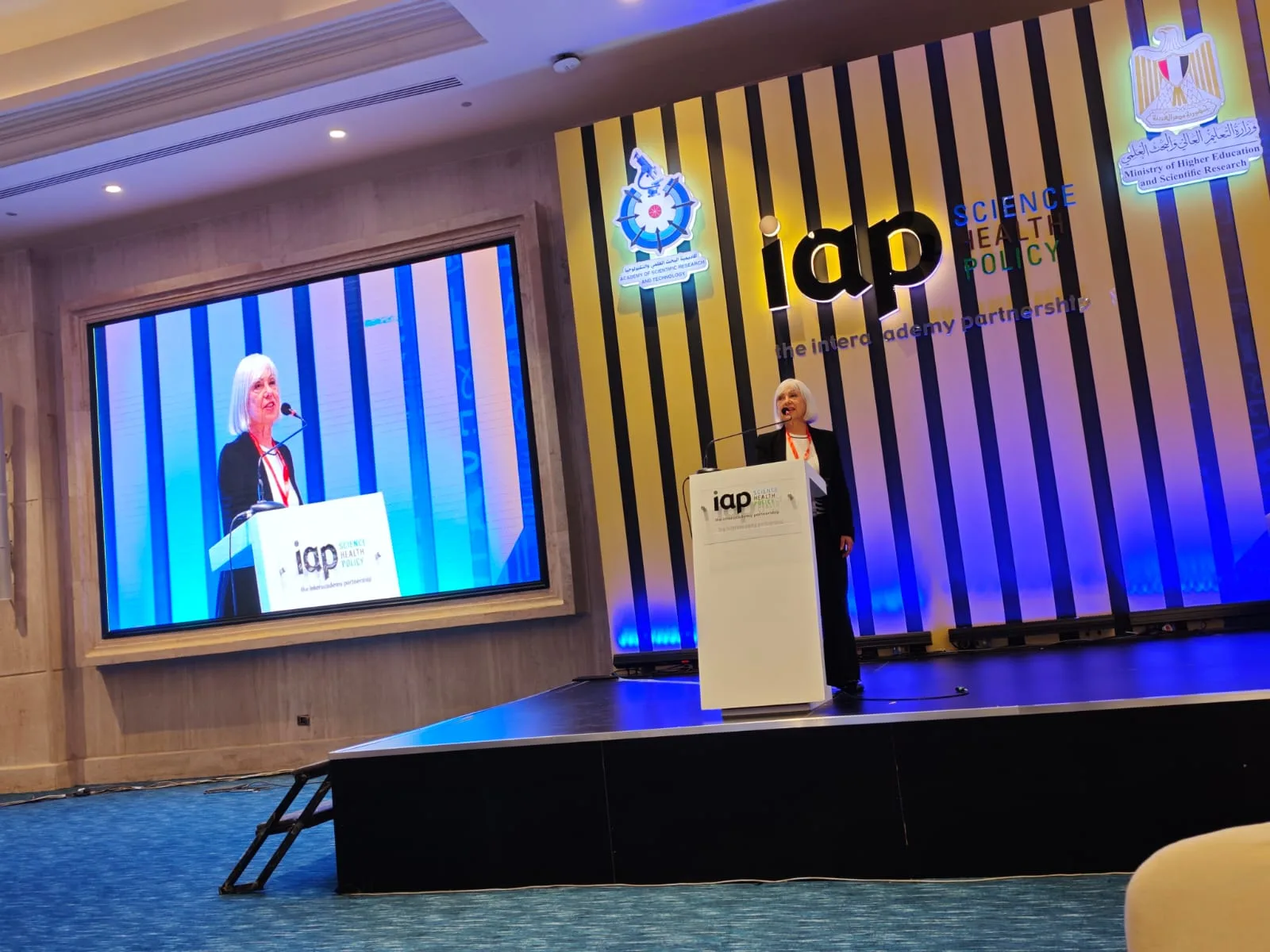
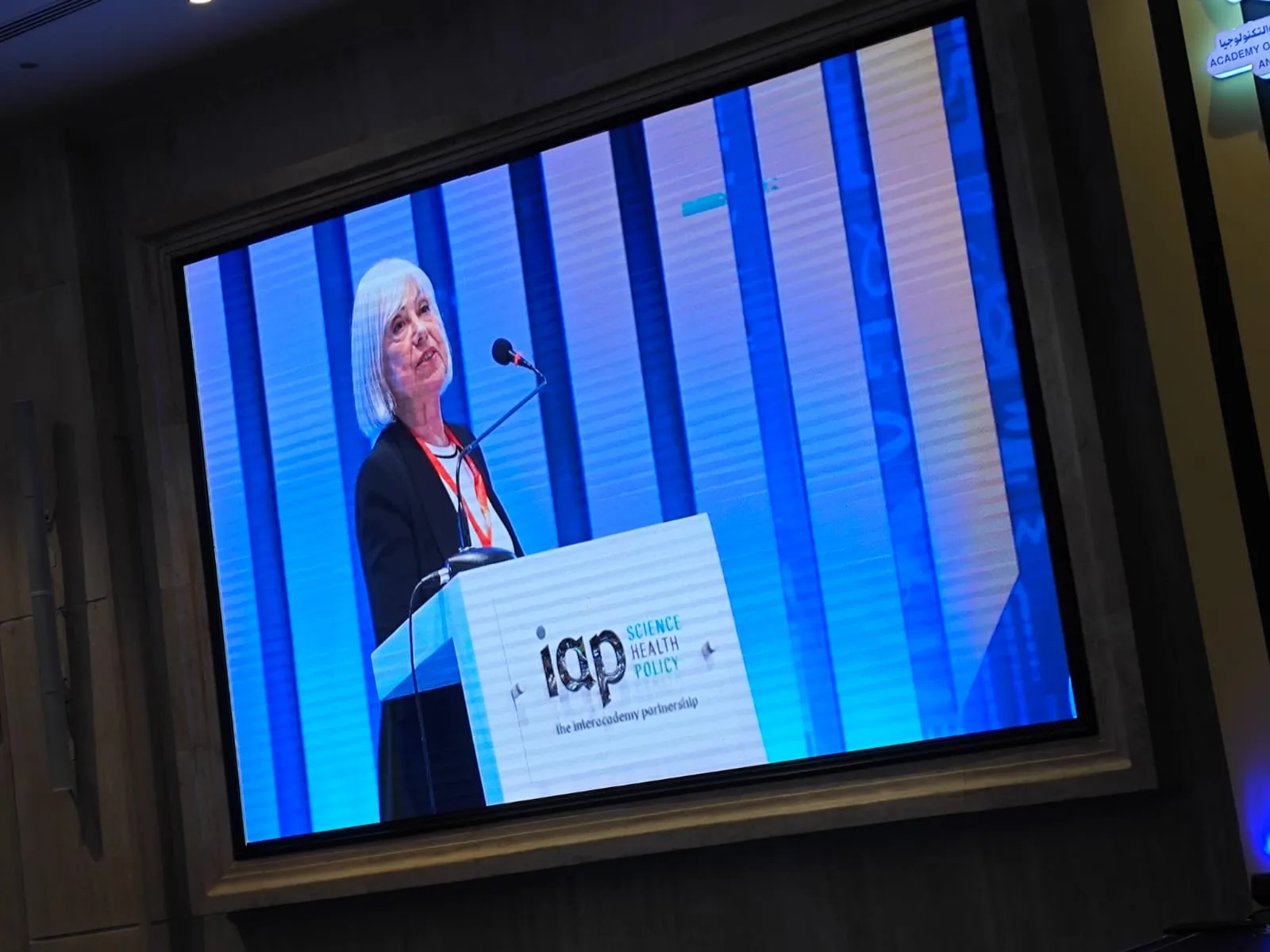
Credit (images): Marcos Cortesão (ABC/IANAS)