
IANAS joined discussions at the IAP General Assembly

Contents
A Regional Network with Global Impact
The Inter-American Network of Academies of Sciences (IANAS) had a strong and influential presence at the 2025 IAP General Assembly, held in Cairo, Egypt, on December 11. This global gathering brought together leaders from Science Academies and regional networks under the theme “Bridging Science, Policy and Society in an Era of Transformation”.
Representing IANAS were Karen B. Strier, Co-Chair of IANAS and Vilas Research Professor at the University of Wisconsin-Madison, and Marcos Cortesão Barnsley Scheuenstuhl, Executive Director of IANAS and Executive Director of International Affairs at the Brazilian Academy of Sciences (ABC). Both played pivotal roles in shaping discussions on the present and the future of the InterAcademy Partnership (IAP).
Representatives from the Americas also secured a prominent role in IAP’s renewed governance, with two seats on the Board and multiple experts serving on the IAP Advisory Board and key Program and Development Committees.
Showcasing the Regional Leadership of IANAS
During the IAP General Assembly, Co-Chair Karen B. Strier represented IANAS by presenting achievements and strategic priorities of IANAS. She emphasized the importance of strengthening science communities across the Americas and providing evidence-based advice to policymakers, reinforcing the role of the Network as a key regional voice in global science.
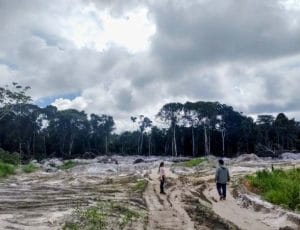
Strier detailed the cornerstone initiatives of IANAS, including the Women for Science, the Water, the Science Education and the Energy Programs. She also spotlighted the Amazon Initiative, a flagship effort to protect biodiversity and tackle climate change in one of the world’s most critical ecosystems, engaging multiple countries and international partners.
In her remarks, the Co-Chair stressed that IANAS programs are not only regional in scope but contribute to global solutions for climate resilience, equity, and sustainable development. She cited recent collaborations such as the statement “A Scientific Call for COP30: Science Academies United for Climate Action”, which as presented ahead of COP30, as examples of how IANAS bridges local priorities with international commitments. Her intervention underscored the Network’s capacity to mobilize scientific expertise for transformative action.

Addressing Engagement and Visibility of the IAP
During the strategic session on “Enhancing Engagement and Visibility” at the IAP General Assembly on December 11, Marcos Cortesão delivered a compelling call for a more inclusive and participatory approach within the InterAcademy Partnership. He emphasized that IAP must reconnect with its member Academies at the grassroots level, fostering direct collaboration rather than relying solely on regional networks and empowering Academies as active national actors in science policy and diplomacy.
The Executive Director of IANAS also highlighted the urgent need for capacity building, particularly for Academies in developing regions, where disparities in resources and influence remain significant. He argued that Academies should serve as essential contributors to shaping global science agendas. By promoting joint initiatives and collaborative projects, the IAP can enhance both its visibility and effectiveness.

The Americas represented in the IAP Board
Following the General Assembly, the IAP Board for 2025-2028 was officially inaugurated, bringing renewed leadership and balanced representation from across the globe. The Americas secured two prominent seats: Peggy Hamburg (USA), re‑elected for a second term, and Helena B. Nader (Brazil, former IANAS Co-Chair), newly elected to the Board. Alongside leaders from South Africa, the Netherlands, Italy, and the Philippines, this diverse team, supported by an expanded Advisory Committee that includes Karen B. Strier, IANAS Co-Chair, sets the stage for inclusive governance and stronger engagement in science policy worldwide.
There is also a strong representation from the Americas at the Program and Development Committees of the IAP. Experts from the region will contribute to the Policy Advice Committee (Antonio Egidio Nardi – Brazil, Carlos Aguirre-Bastos – Bolivia, and Roberto Williams – Argentina) and the Communication, Education & Outreach Committee (Gabriel Luis Bernardello – Argentina and Jorge Huete-Perez – Nicaragua).


Other news