
IANAS Water Program Expands Activities in the Peruvian Amazon
Contents
Field work build on regional dialogue initiated during events held in Peru in 2025
The IANAS Water Program continues to advance its initiatives with a new phase of field activities carried out in the Peruvian Amazon in early 2026. These activities, presented in a report prepared by the program, build directly on the regional dialogue and scientific coordination initiated during the events held in Peru in 2025, which laid the groundwork for a broader research and intervention agenda focused on the interconnections between water, forests and human health. Click here to access the full report.
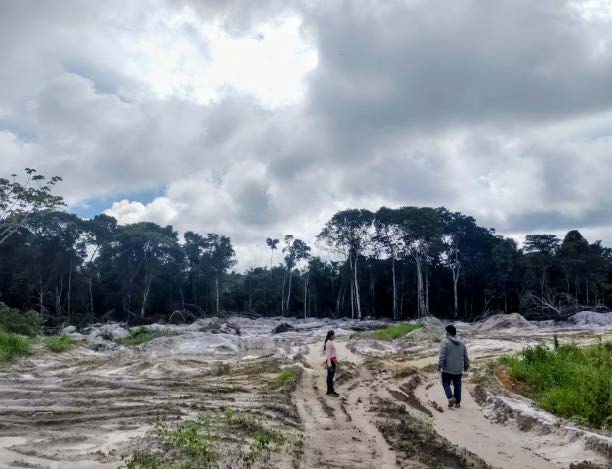
As part of the IANAS Amazon Initiative, the Water Program organized a two-week field work campaign from 27 January to 7 February 2026 in Iquitos and surrounding areas, in preparation for the development of a major research and intervention project entitled “Management of Waters, Forests and Sand in the Amazons – security for ecosystem and human health”. This initiative responds to increasing environmental pressures in the region, particularly those associated with deforestation and the extraction of white sand for construction. The field activities were carried out in close collaboration with Peruvian academic institutions and were planned and coordinated by Nicole Bernex (Peruvian Focal Point in the IANAS Water Program), Katherine Vammen (Co-Chair of the IANAS Water Program), and David Urquiza, Director of the Research Group Variaciones Espacio‑Tiempo de Atributos Forestales (VETAF).
Initiative links forest ecology, geological processes and local economic dynamics
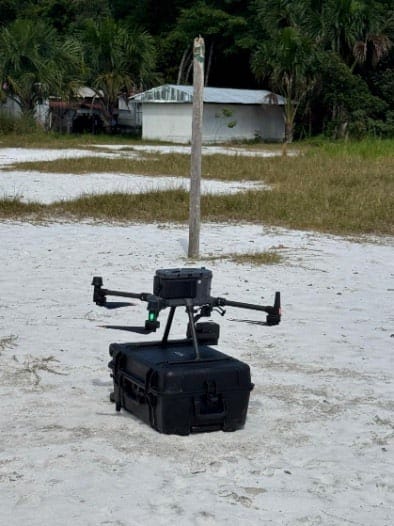
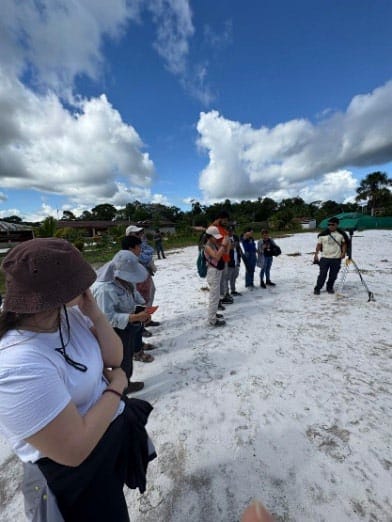
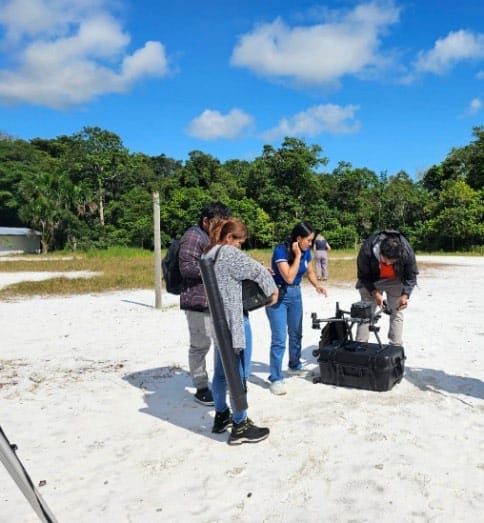
Field work included reconnaissance in forest territories as well as in active and abandoned sand quarries, with researchers documenting dominant tree species, forest structure, associated geological formations and post-extraction deterioration patterns. In addition to environmental data collection, the team conducted interviews and thematic conversations with local residents, sand transporters and small business operators, aiming to better understand the commercial circulation, transport routes and local economies associated with sand extraction. Student teams mapped infrastructure elements such as storage areas, transport facilities and river ports used for loading and unloading sand, contributing a valuable socio-economic dimension to the research. In March 2026, a workshop was held with 51 teachers of school system of Fe y Alegría, in which two booklets were socialized: “Water Resources and the Amazonian Water Cycle” and “Climate Change in the Amazon”.
These scientific, educational and community‑based activities represent an important step forward in strengthening regional cooperation and building a robust knowledge base for future initiatives. The results of this continuing work reinforce the network’s commitment to evidence‑based solutions that promote ecosystem integrity, water security and human health in the Amazon.
Credit (all images): collaborators of the activities
Other news