
IANAS-ABC Meeting Strengthens Science-Innovation Links in Latin America
Contents
High-Level Dialogue on Science and Innovation in Latin America
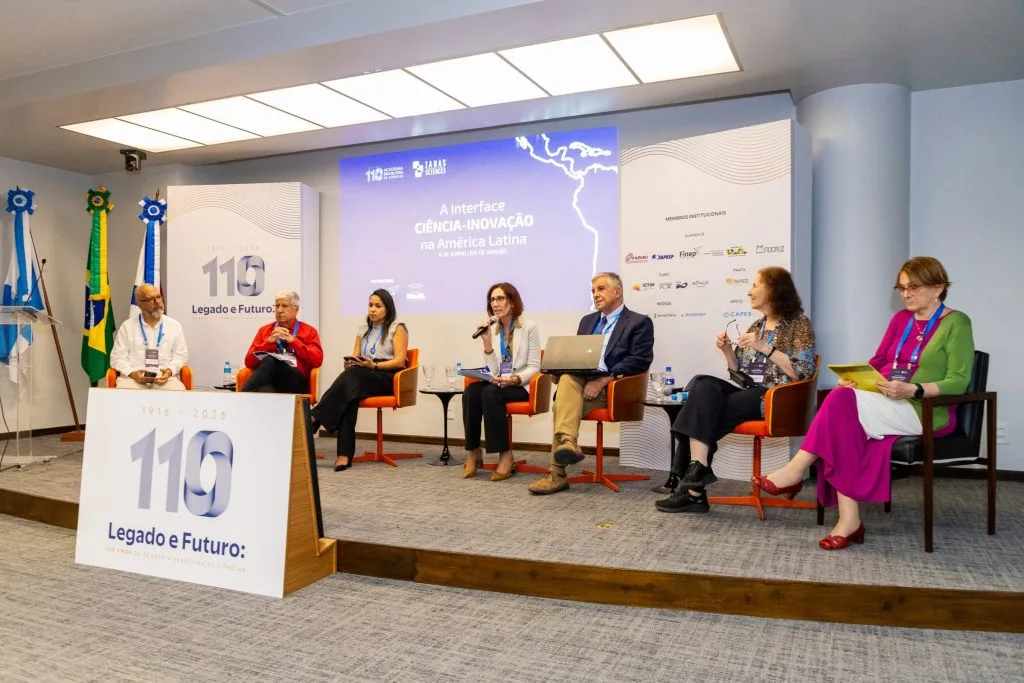
On June 8, 2026, the Inter-American Network of Academies of Sciences (IANAS) and the Brazilian Academy of Sciences (ABC) convened a high-level meeting in Rio de Janeiro, Brazil, to advance dialogue on the “Science-Innovation Interface in Latin America”. Sponsored by the Brazilian Funding Agency for Studies and Projects (Finep), the event brought together leading scientists, innovation experts, funding agencies, and representatives of several national academies from across the region, underscoring the growing importance of aligning scientific knowledge with innovation systems to promote sustainable development.
Participants from different countries, including Argentina, Brazil, Chile, Colombia, Costa Rica and Panama, engaged in discussions aimed at strengthening cooperation between science institutions and innovation agencies, a key step toward translating research into tangible socio-economic impacts. The event was held in the context of the Annual Meeting of the Latin American Network of Innovation Agencies (RELAI), bringing together academies from some countries that are members of the network and creating a unique opportunity to deepen dialogue between scientific communities and institutional actors responsible for innovation policy and implementation.
Opening ceremony highlights: a call to connect science and development
The event opened with a ceremony that reflected both the diversity and strategic importance of the science and innovation ecosystem in Latin America. Participants included Karen B. Strier (Co-Chair of IANAS) and Helena B. Nader (President of ABC), as well as representatives from major Brazilian science and innovation institutions such as the Brazilian Funding Agency for Studies and Projects (Finep), the Coordination for the Improvement of Higher Education Personnel (Capes), the Brazilian Development Bank (BNDES), and the Oswaldo Cruz Foundation (Fiocruz).
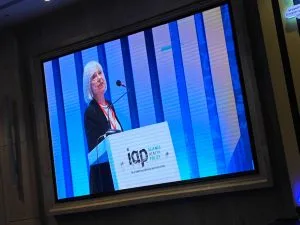
In her remarks, Karen B. Strier, full member of the U.S. National Academy of Sciences (NAS), emphasized that the network’s participation in the meeting is closely aligned with its mission to strengthen scientific collaboration among universities, academies, industry, and governments. She also pointed to rapid global transformations as a strategic opportunity for Latin American countries to assume a more prominent role in knowledge production, stressing that this moment calls for expanding and strengthening collaborative networks to advance science, foster innovation, and address shared global challenges. She concluded by expressing strong support for continued international and regional cooperation as a foundation for a more robust and inclusive innovation agenda.
Helena B. Nader, former IANAS Co-Chair, further emphasized the urgency of strengthening the role of science in economic and social development across the region, noting that Latin American countries still face challenges in fully recognizing science as a driver of innovation, competitiveness, and inequality reduction.
The opening conference, delivered by Finep President Luiz Antonio Elias, reinforced this perspective by situating innovation within a broader geopolitical context. Elias argued that the current reconfiguration of global value chains presents a strategic opportunity for Latin America to reposition itself, not as a supplier of commodities, but as a competitive player in knowledge-based economies. He stressed the importance of sustained public investment in science and technology, pointing to the recent strengthening of Brazil’s National Fund for Scientific and Technological Development (FNDCT).
From dialogue to action: regional challenges and opportunities
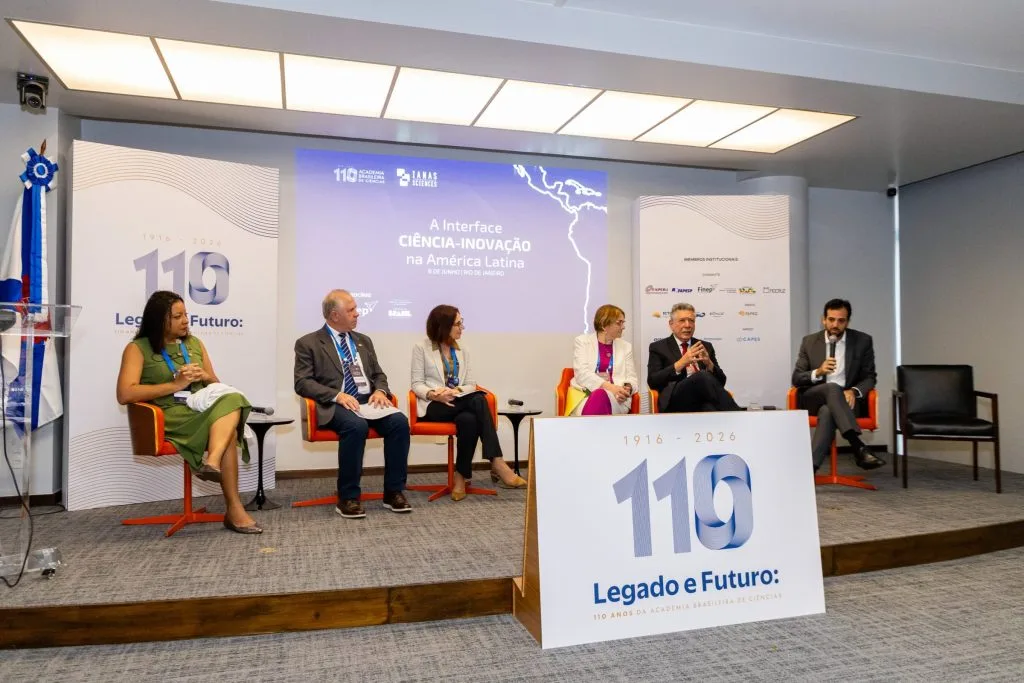
Throughout the event, panels addressed key bottlenecks in the region, including the persistent gap between scientific production and innovation outcomes, limited funding mechanisms, and weak coordination among actors such as universities, governments, and the private sector. Speakers emphasized that overcoming these challenges requires mission-oriented innovation policies and more dynamic funding approaches, as well as stronger engagement between academia and industry. The discussions also highlighted the need for regional cooperation mechanisms, including shared research infrastructure and cross-border innovation initiatives.
One of Brazil’s leading figures in artificial intelligence, computer scientist Virgílio Almeida from the Federal University of Minas Gerais (UFMG), addressed the innovative uses of AI, ranging from drone control to decision-making processes.
Physicist Vanderlei Bagnato, former coordinator of the Innovation Agency of the University of São Paulo (USP), argued that innovation in academia requires a constant awareness of the potential applications of research and universities should act as facilitators by bringing companies onto campus. In the same vein, engineer Jorge Audy, Superintendent of Innovation at the Pontifical Catholic University of Rio Grande do Sul (PUCRS), defended startup incubators as absolutely central to achieving innovation. Citing the example of Google, founded by two Stanford PhD students, he noted that the company continues to generate dividends for the university to this day.
Representing the Federation of Industries of the State of São Paulo (FIESP), engineer and entrepreneur Pedro Wongtschowski also emphasized the importance of startup ecosystems in fostering density and interaction among entrepreneurs. He argued that startups in Brazil and Latin America must be born with a global outlook, operating in English and targeting international markets.
Marcelo Prim, Chief Operating Officer of the Brazilian Company for Industrial Research and Innovation (Embrapii), highlighted that the success of their model stems from risk-sharing and the strengthening of mutual trust between academia and industry. However, beyond agility, he stressed that continuity and redundancy are also crucial. Brazil and Latin America should experiment with more models and encourage competition among institutes, as international experience shows this approach yields results.
Criticism of rigid funding models was shared by several panelists. Ruy de Araújo Caldas, researchers at the University of São Paulo (USP), argued that public resource management still follows a strict logic, requiring that every expense be predetermined in detail. Innovation, however, is inherently chaotic.
Another recurring concern is that federal legal advisors within public research institutions often hinder innovation projects due to legal uncertainty. Representing the Innovation Laboratory of the Office of the Comptroller General (AGU), legal expert Bruno Portela argued that Brazil has more than twenty legal instruments that allow researchers to pursue innovation safely.
Beyond direct funding, stimulating demand is also a key policy tool, as highlighted by Caetano Penna, Director of Strategic Projects at the Center for Management and Strategic Studies (CGEE). He presented examples of subprograms whose success, or failure, was strongly influenced by demand-side factors.
Closing session: Academies converge on a common agenda
The final session of the meeting (“Towards an Innovation Agenda for Latin America“) placed the Academies of Sciences at the center of regional cooperation efforts. Representatives from national academies presented their perspectives on the main challenges and opportunities in strengthening the science-innovation interface at the country level.
Alicia Dickenstein, President of the National Academy of Exact, Physical and Natural Sciences of Argentina, pointed to the current financial constraints faced by Argentine science, while praising the breadth of Brazil’s funding ecosystem. Despite these challenges, she underscored recent national achievements, including innovations in nuclear energy, satellites, biodiesel, and advances in cancer and COVID-19 research.
Sergio Lavandero, President of the Chilean Academy of Science, emphasized the Academy’s role in monitoring public policies on innovation and referenced new legislation aimed at strengthening links between academia and industry. He stressed that innovation requires deep cultural change, including improvements in how academia communicates and addresses the growing problem of disinformation.
Carlos Alberto Vargas, President of the Colombian Academy of Exact, Physical and Natural Sciences, noted that Colombia faces both structural underinvestment and weak coordination among innovation actors. In a context of an ongoing presidential election, he warned that science has not yet received sufficient attention in national policy agendas, stressing the need to more firmly institutionalize science within the country.
Guillermo Alvarado, Treasurer of the National Academy of Sciences of Costa Rica, highlighted the Academy’s advisory role to government, particularly in areas such as seismic risk. He also pointed to successful science communication initiatives in national parks, which cover a quarter of the country’s territory, while noting persistent challenges such as limited investment and weak interaction among research laboratories.
Mairim Solis, Vice-President of Panamanian Association for the Advancement of Science, emphasized the importance of building bridges between government, academia, and the scientific community to promote science, technology, and education. She argued that such articulation must extend beyond national borders, with stronger regional collaboration supported by countries with more developed scientific systems.
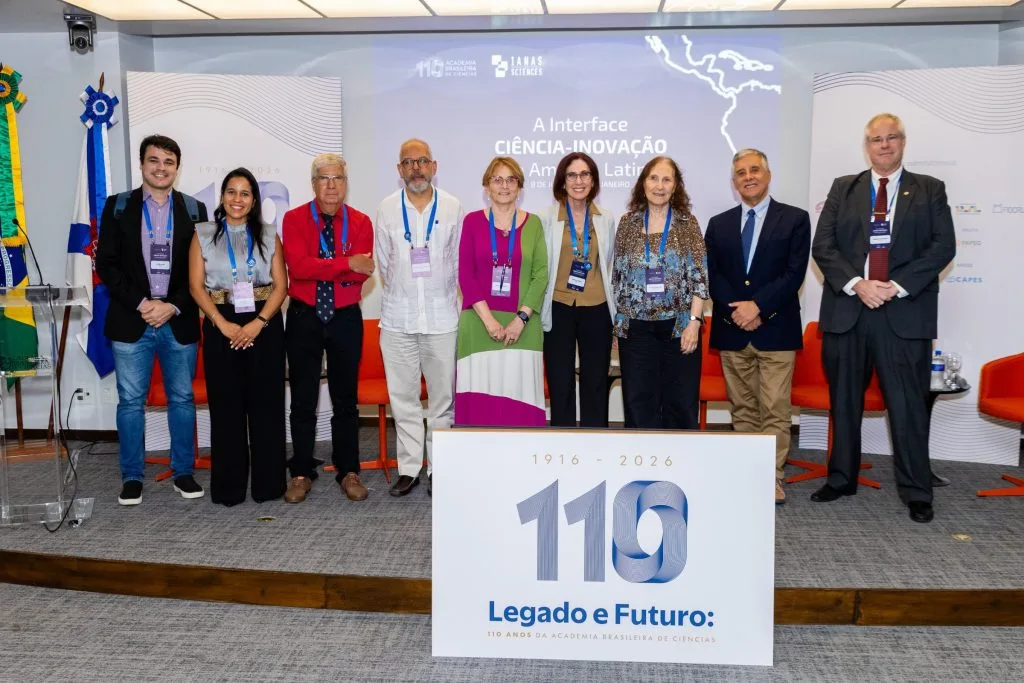
Together, these perspectives reinforced the importance of regional dialogue and coordination, setting the stage for the presentation of a joint declaration – one of the key outcomes of the meeting.
A Joint Declaration for Regional Integration
The event culminated in the presentation of the joint declaration “Toward an Agenda of Regional Integration and Science and Innovation Policies for Sustainable and Sovereign Development in Latin America”, marking a key outcome of the meeting. The document calls for a renewed commitment to regional integration in science, technology, and innovation policies, emphasizing that stronger links between scientific research and innovation systems are essential for sustainable development, industrial competitiveness, and national sovereignty.
Available in English, Spanish and Portuguese, the declaration underscores that robust national innovation systems, characterized by effective interaction among universities, research centers, industry, government, and civil society, are fundamental for transforming scientific knowledge into socio-economic benefits. At the same time, the document acknowledges structural challenges faced by the region, including insufficient investment in research and development, limited coordination among innovation actors, and dependence on external technologies. Addressing these barriers, the Academies argue, will require coordinated regional strategies and sustained political commitment.
Strengthening IANAS’ mission in the region
The meeting reaffirmed the central role of IANAS as a platform for scientific cooperation across the Americas. By bringing together national academies, the network facilitates knowledge exchange, promotes evidence-based policymaking, and supports initiatives aimed at strengthening scientific capacity and innovation systems in the region.
As global competition intensifies and technological change accelerates, the discussions held in Rio de Janeiro point to a clear conclusion: Latin America’s future development depends on its ability to bridge the gap between science and innovation.
Other news